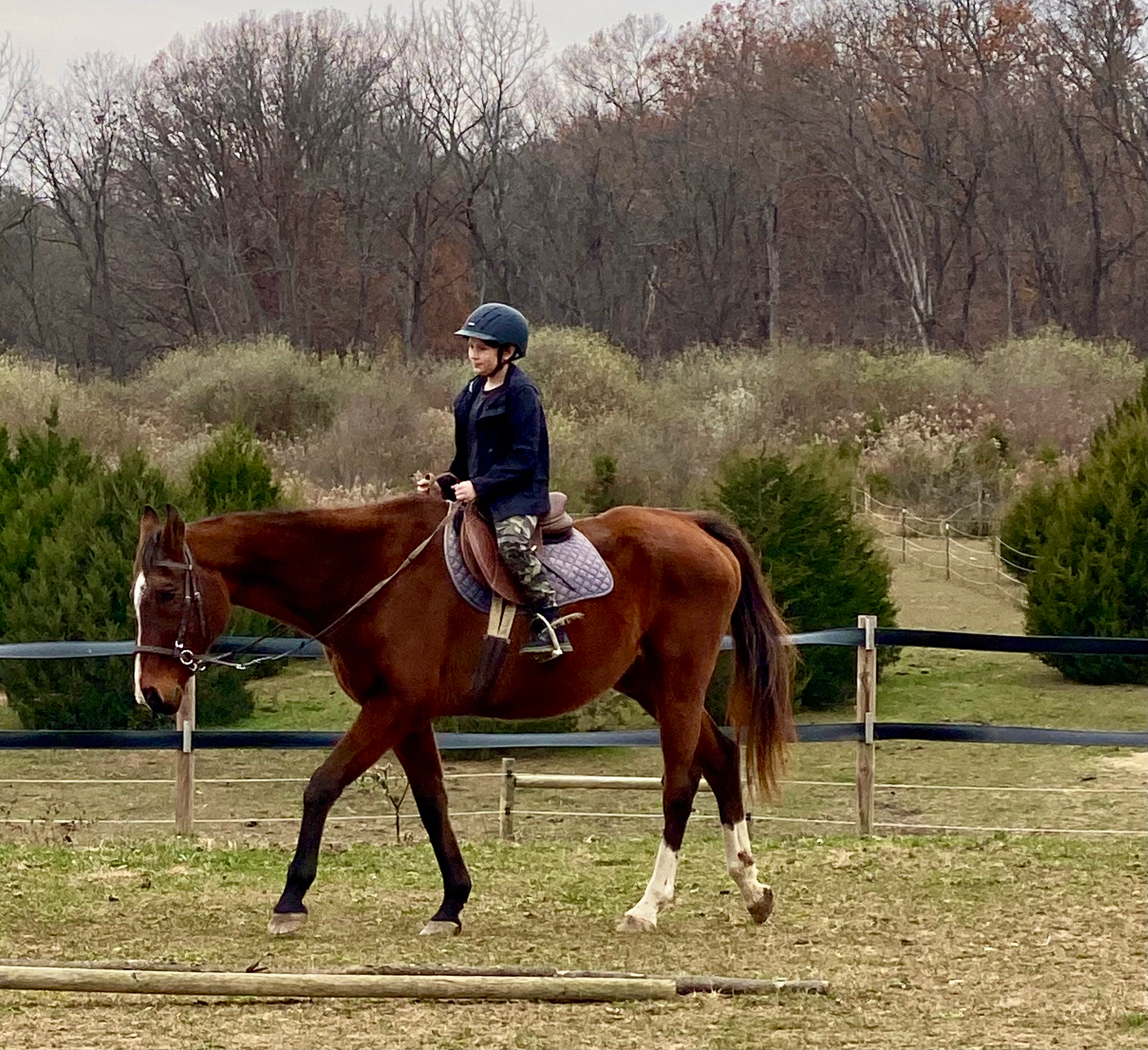
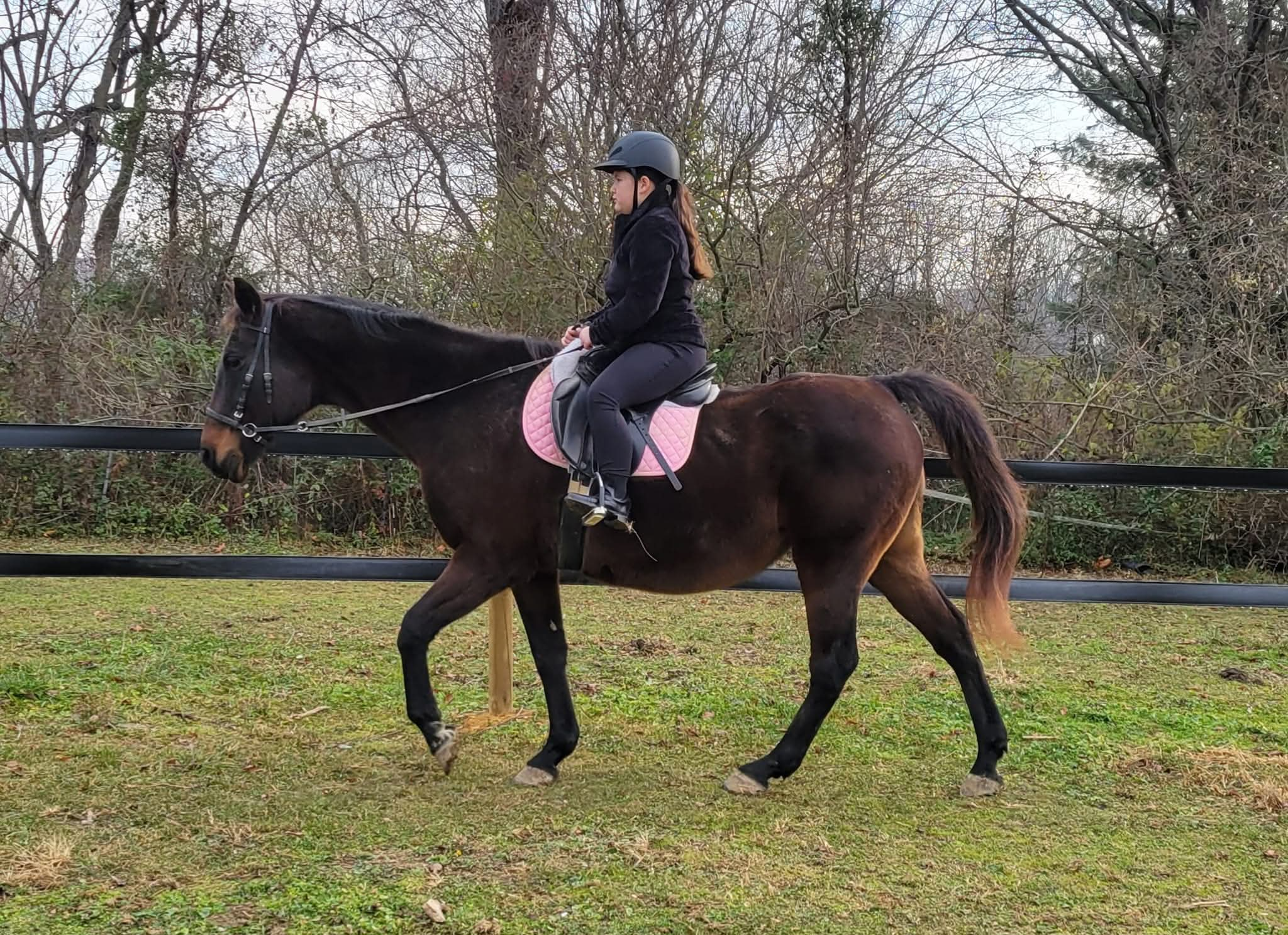
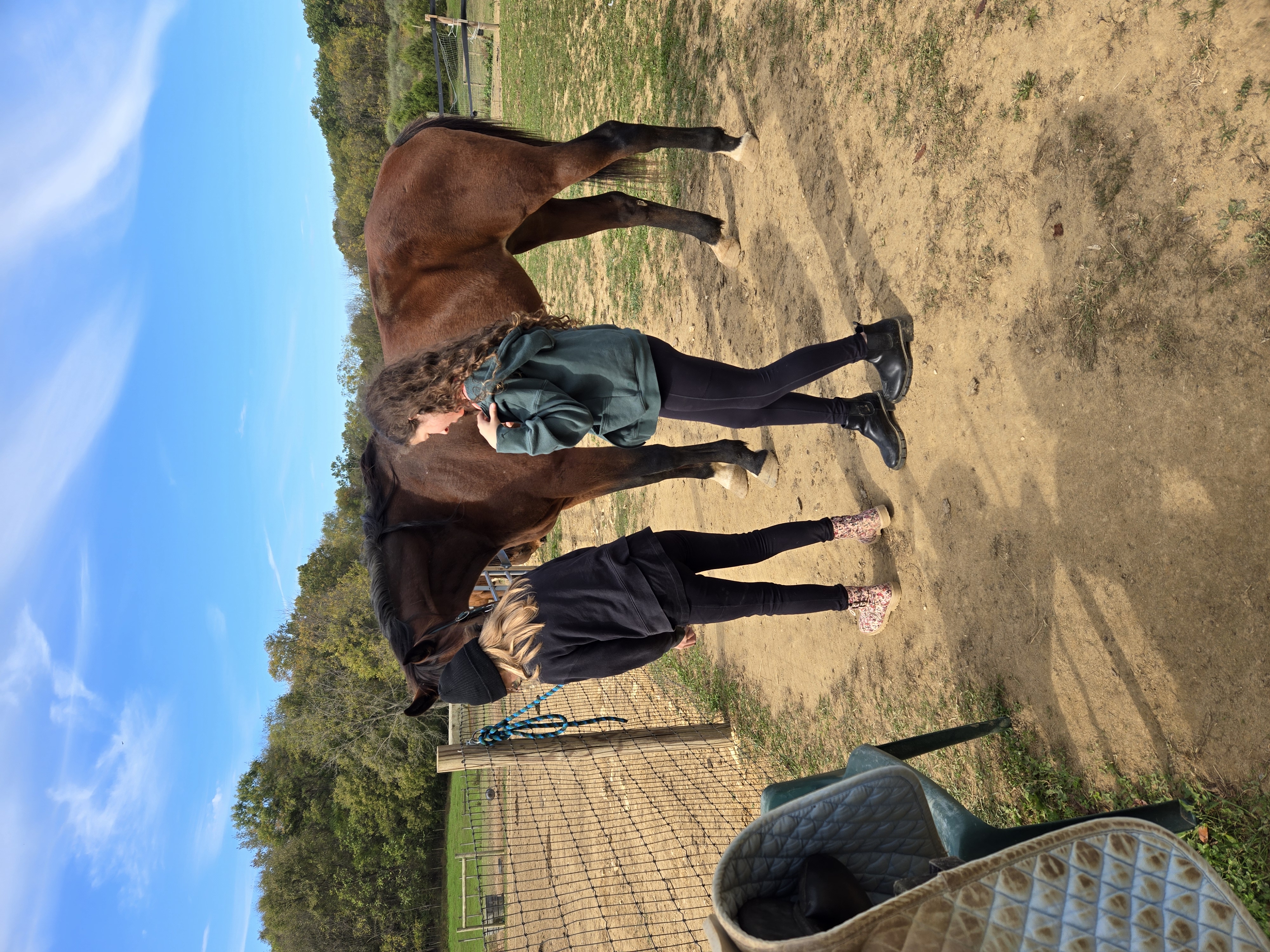
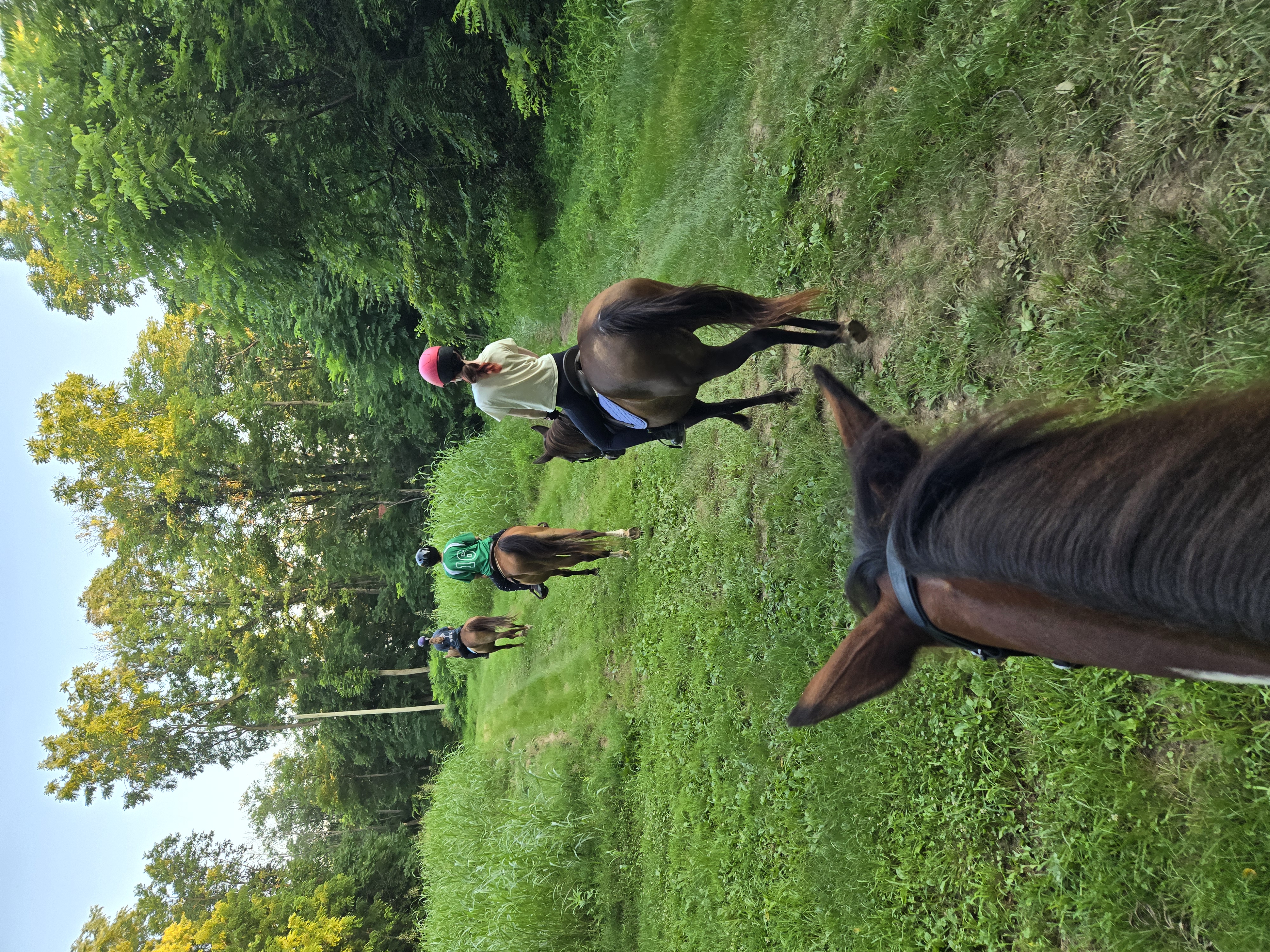
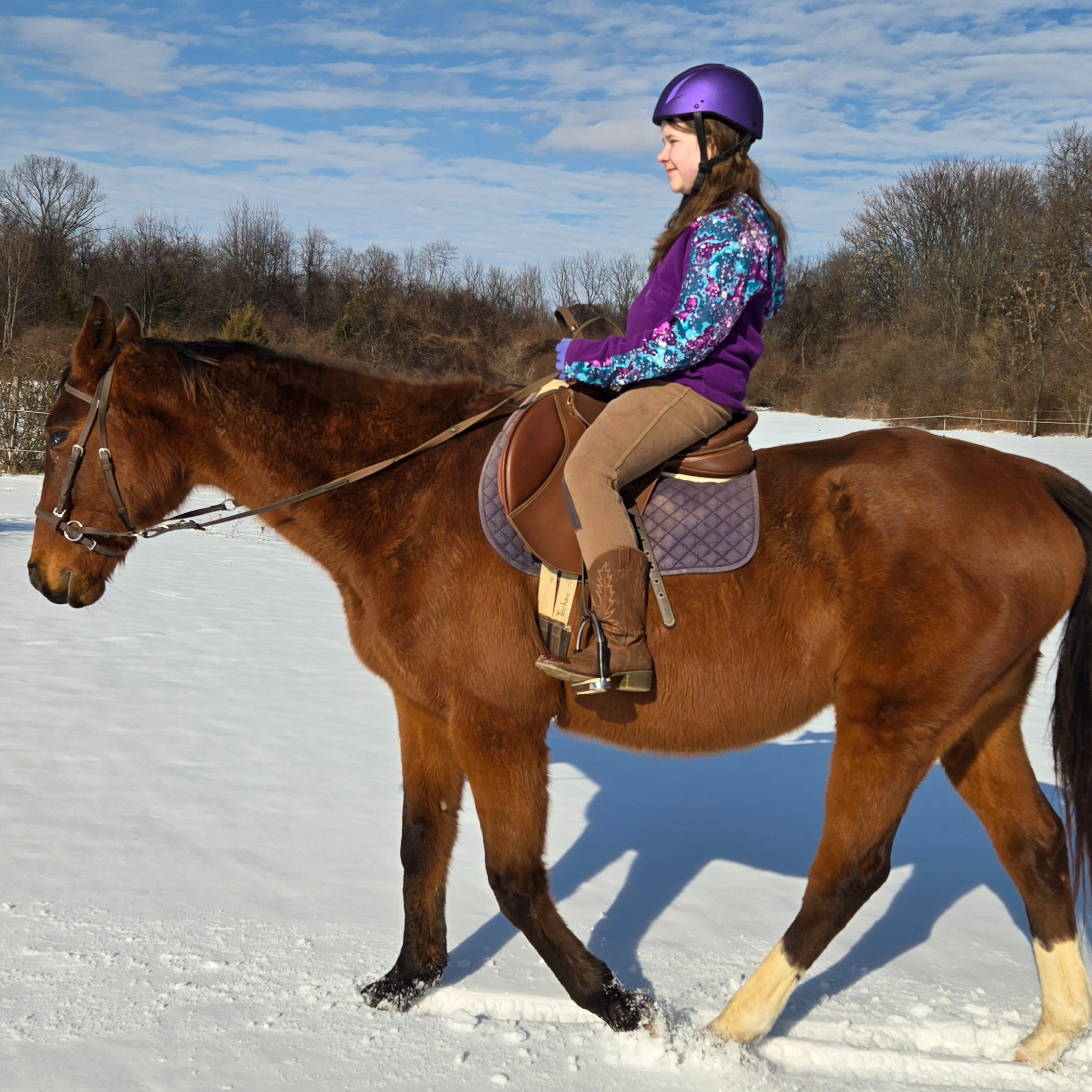
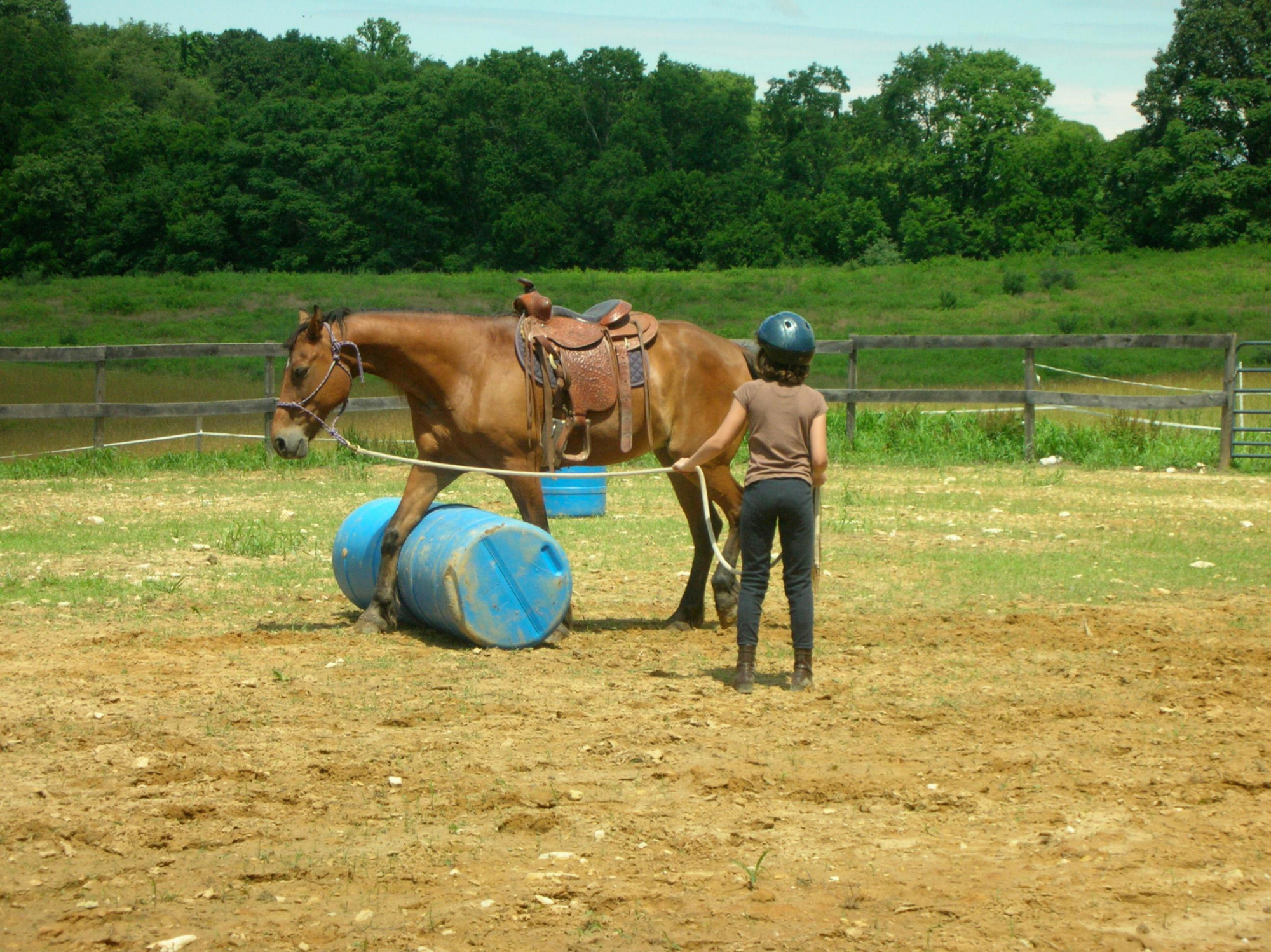
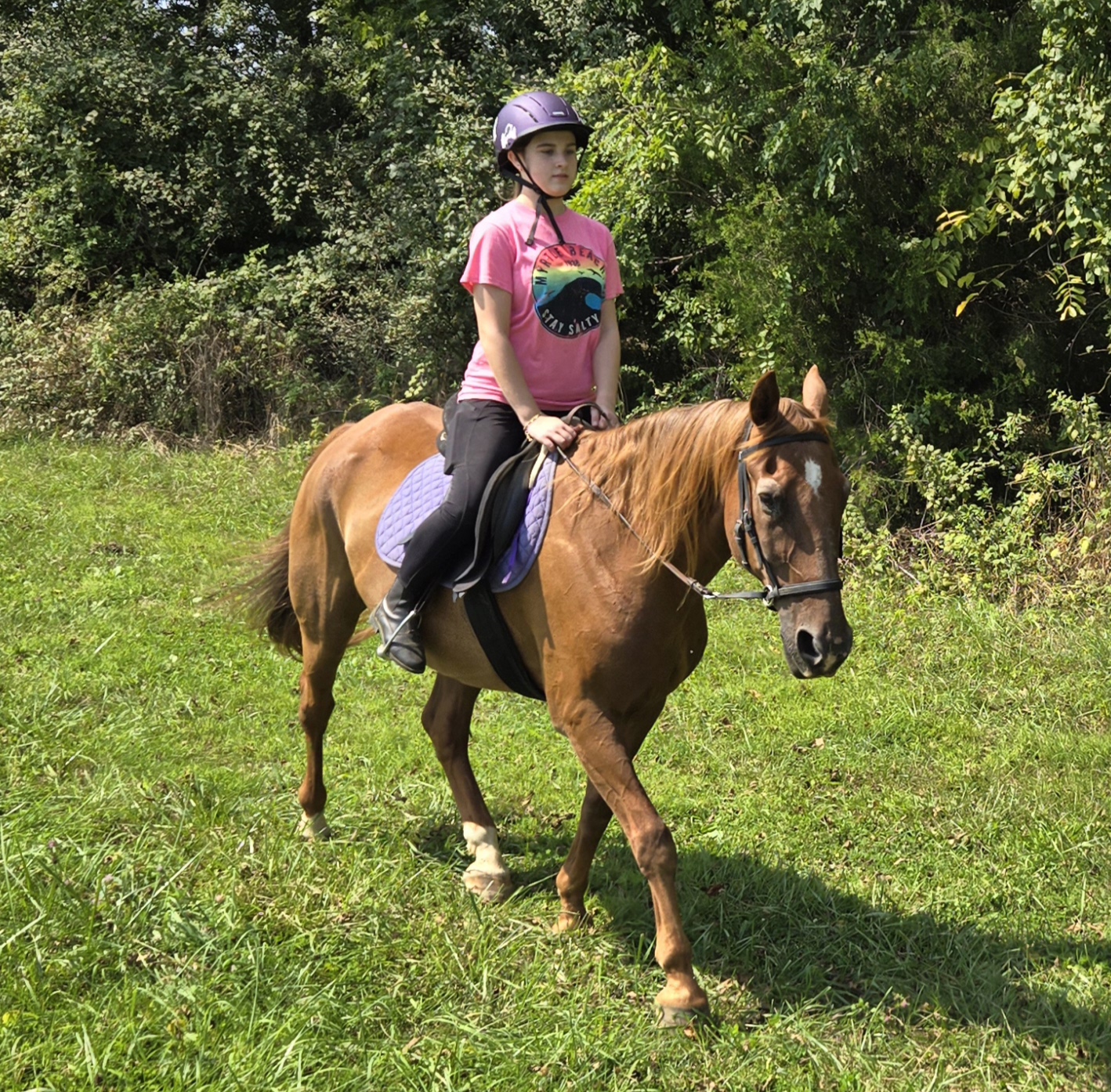
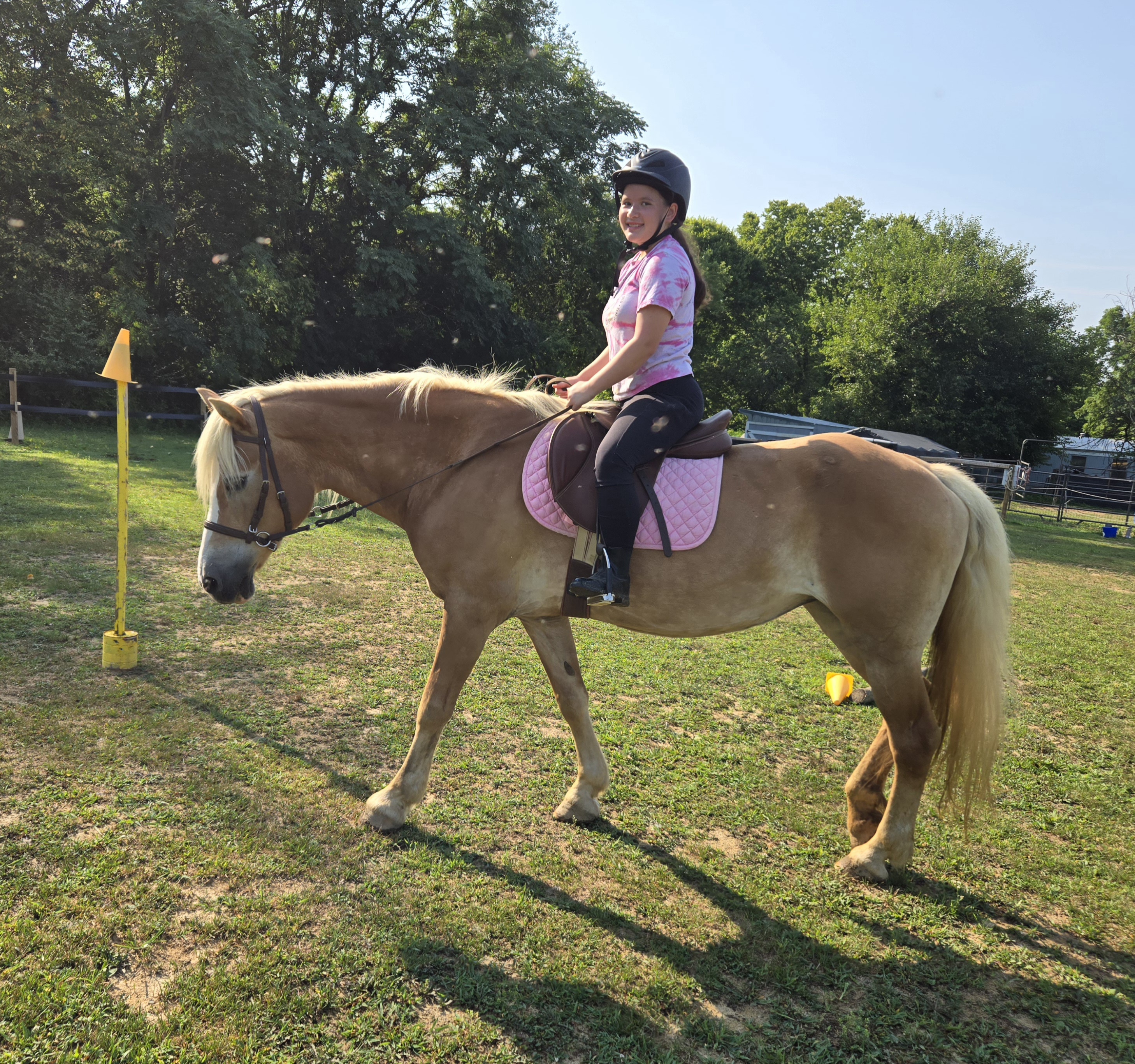
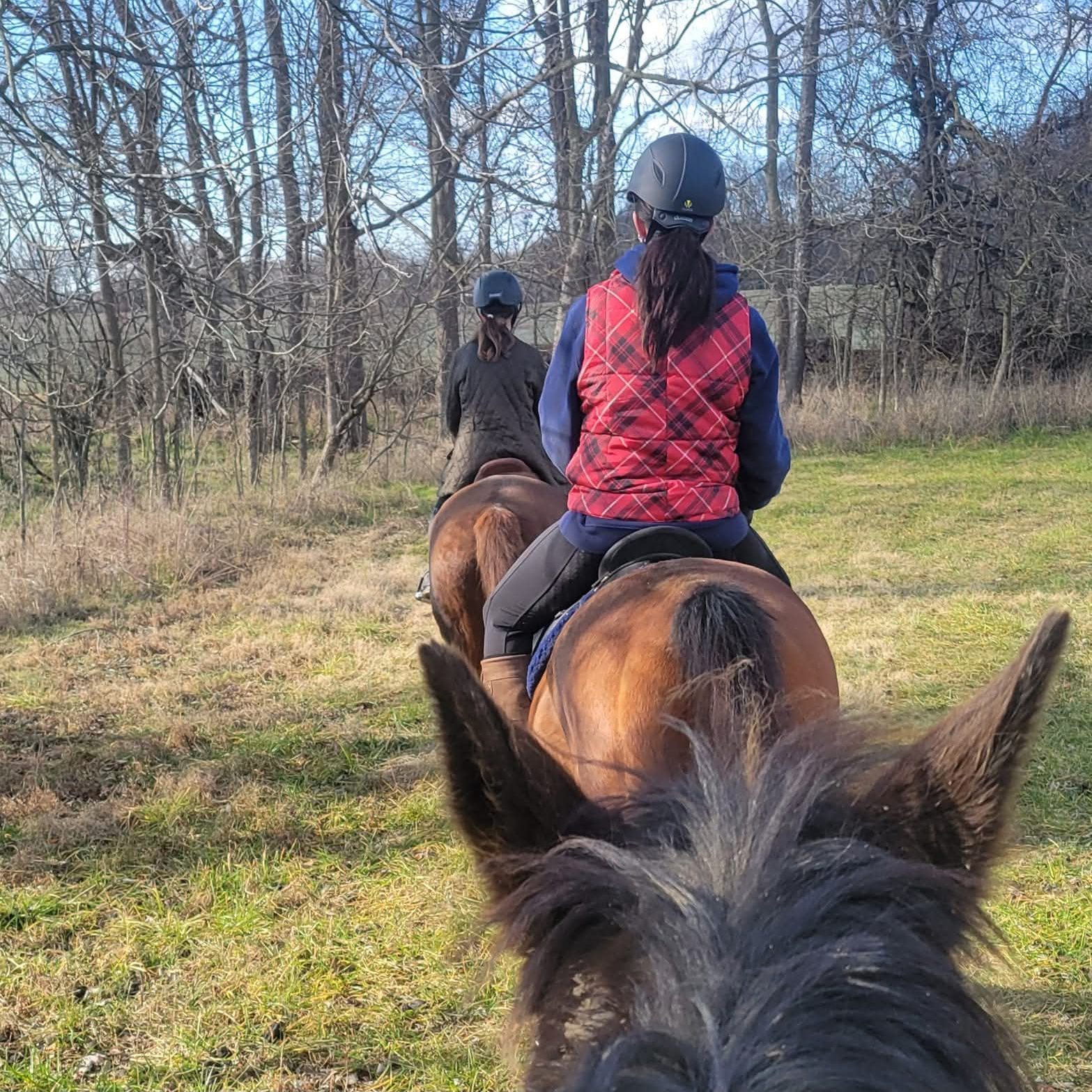
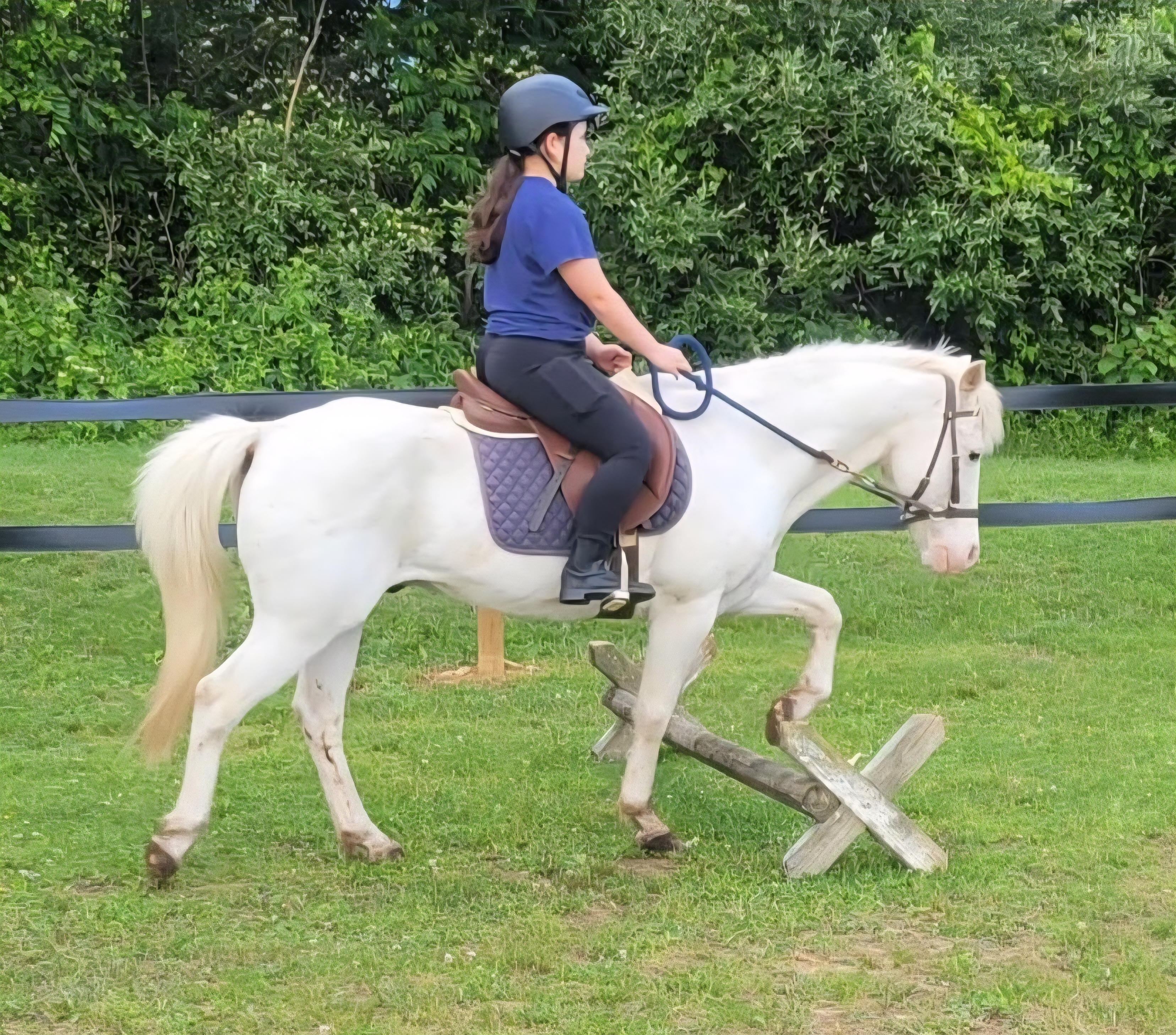
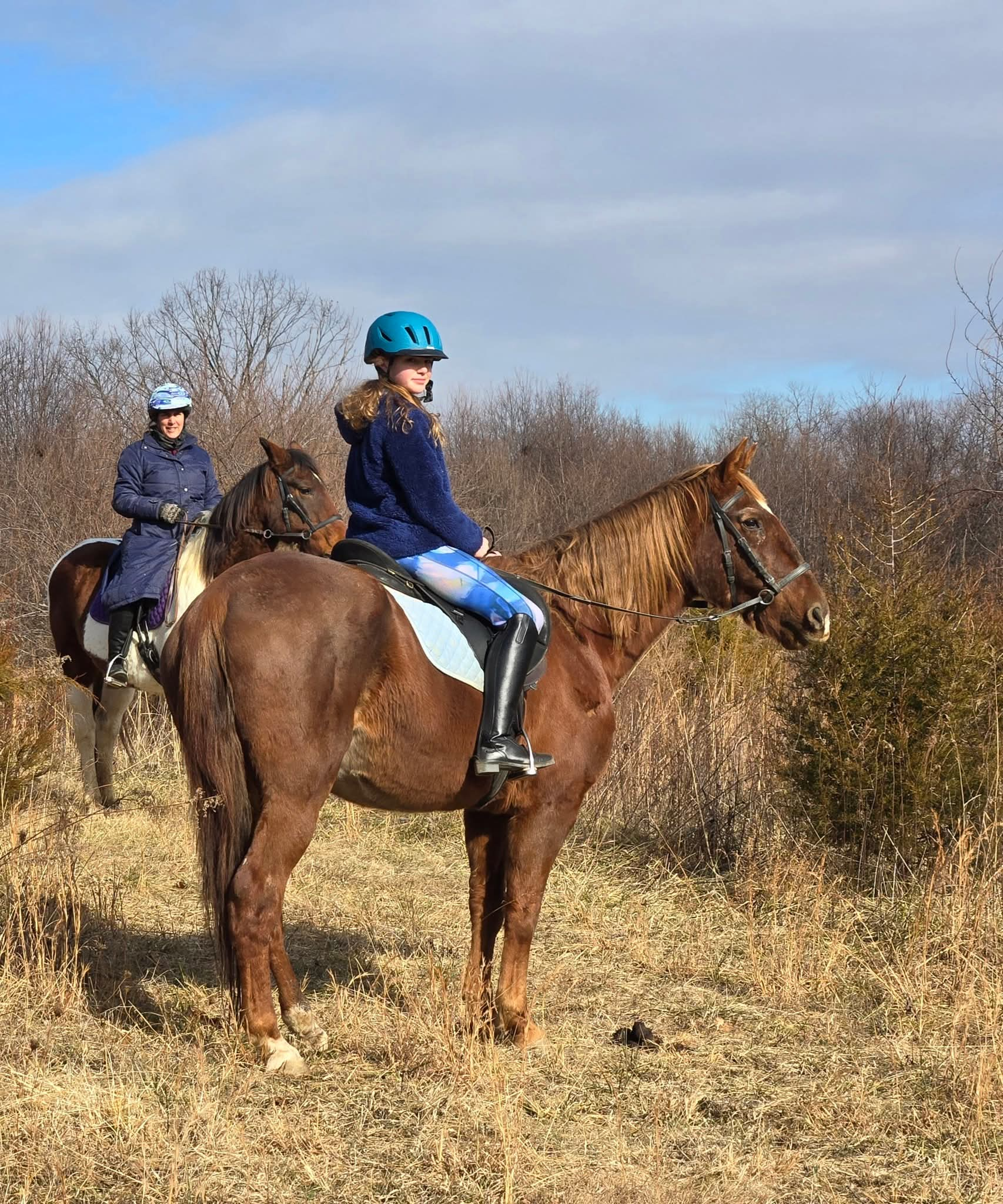
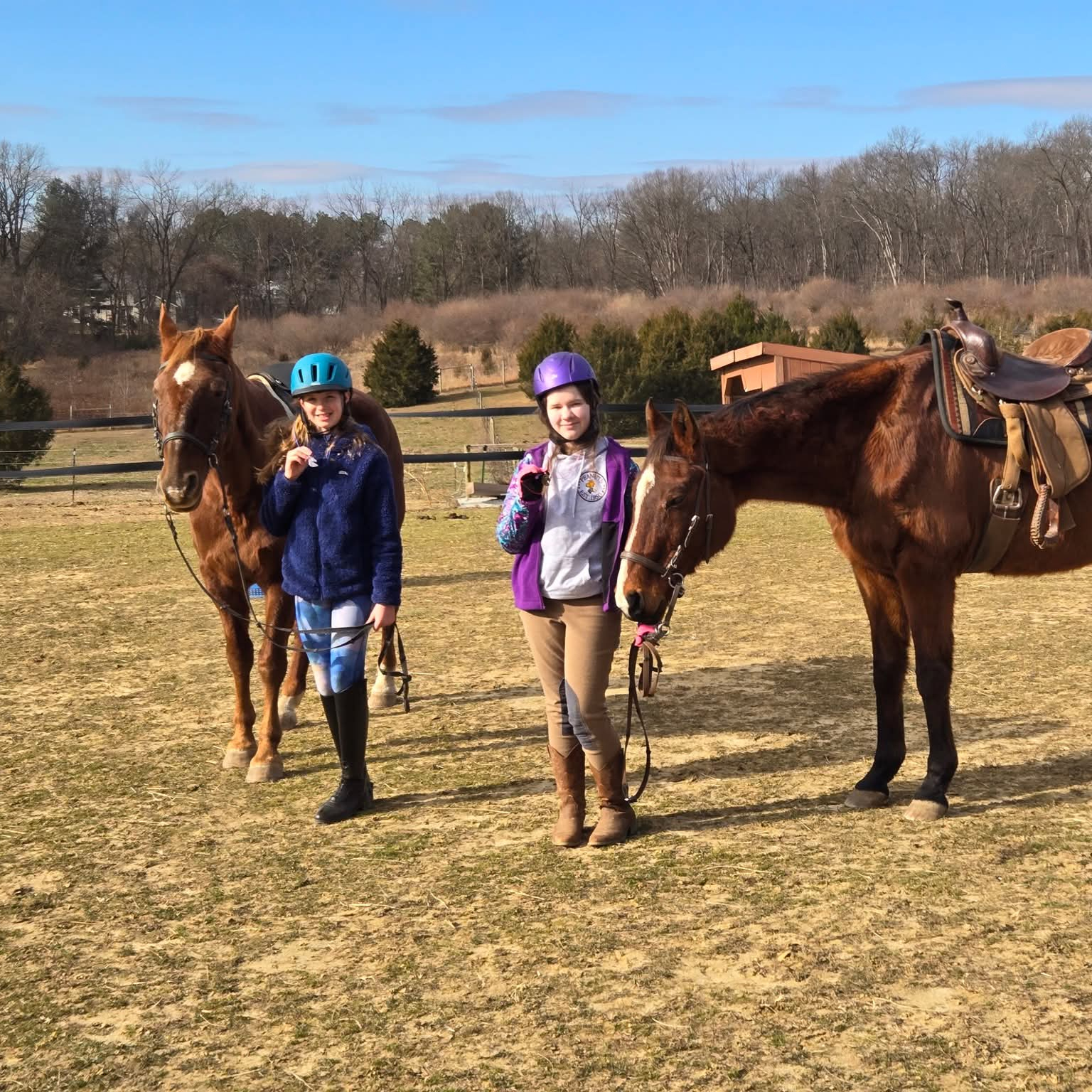
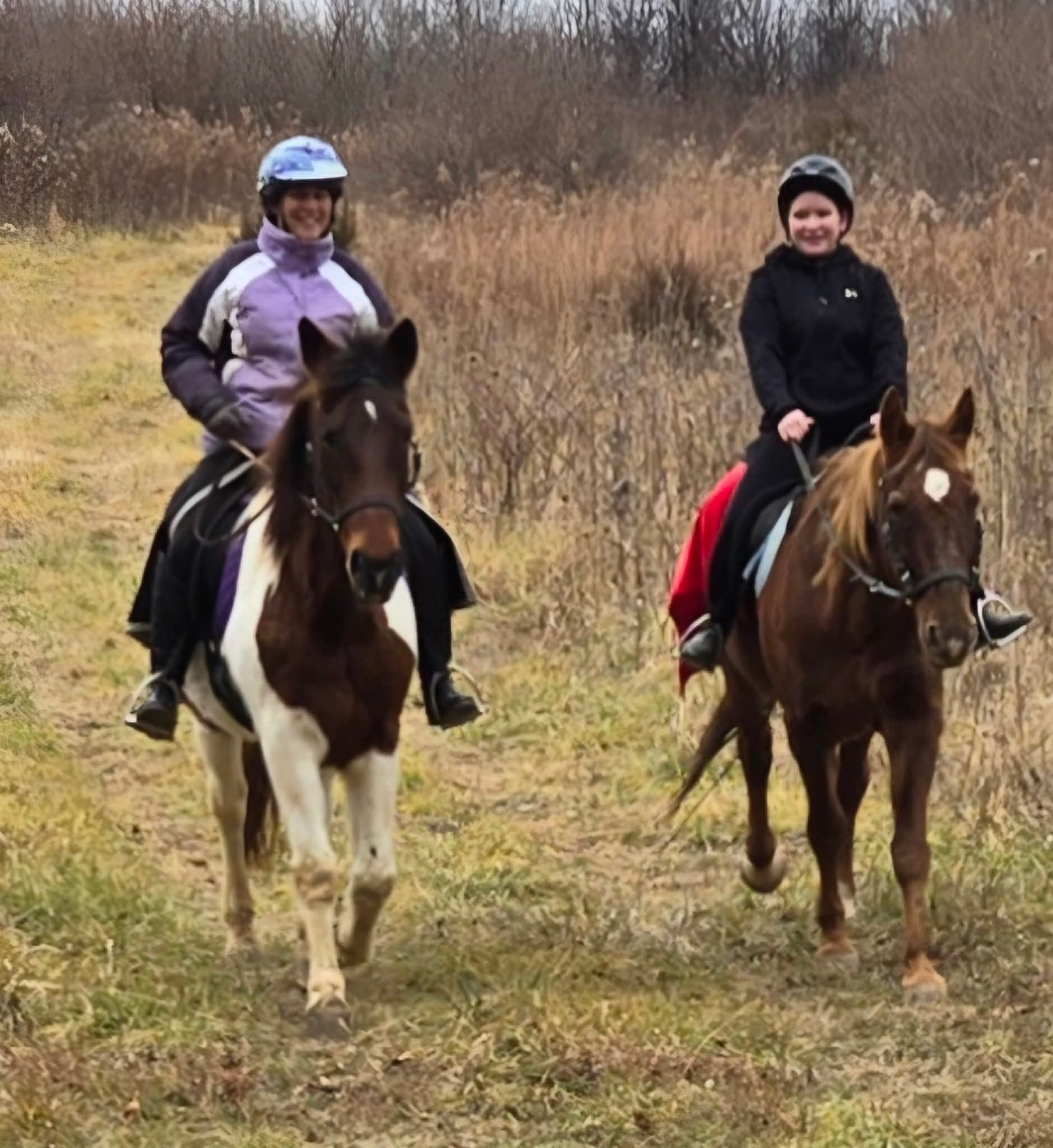
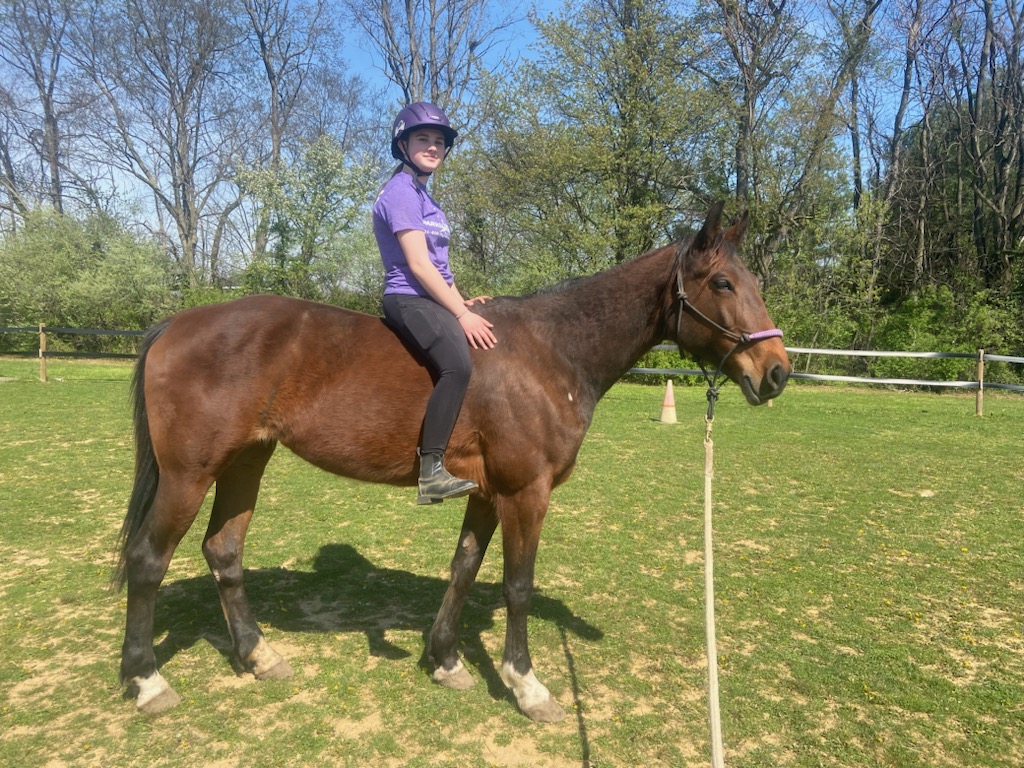
Drawing inspiration from our founders Pony Club roots, this comprehensive mounted and unmounted program focuses on teaching riders a broad scope of equine knowledge.
Students will learn skills to build upon- earning certificates and developing independence as they advance.
Riders will be able to show their abilties before moving to the next level. Each level utilizes skills gained in previous levels, ensuring a full scope of understanding and capabilities.

Students learn safety concepts for handling horses. These lessons occur on the ground and in the saddle, building confidence with grooming, tacking and riding at a walk and posting trot.
Riders will develop knowledge of tack and grooming equipment, elementary equine anatomy, and basic needs of the horse.
Riders will:
-
Describe safe riding attire.
-
Properly fit a helmet.
-
Catch a horse with safe technique.
-
Demonstrate safe leading from near side in pasture and through gates.
-
Tie horse safely, using quick-release knot.
-
Know names and functions of basic grooming tools.
-
Perform basic grooming to prepare a horse for a ride.
-
Demonstrate awareness of basic horse safety in grooming and tacking.
-
Pick out hooves safely, demonstrating knowledge of basic hoof care.
-
Mount and dismount.
-
Complete warm-up stretches.
-
Perform an emergency dismount at a halt and walk.
-
Halt by disengaging horse's hindquarters, once on each rein.
-
Mount and dismount correctly and safely.
-
Shorten and lengthen reins correctly.
-
Maintain balanced position through walk-halt transitions.
-
Demonstrate basic maneuvers at a walk.
-
Drop stirrups and pick up again, without looking down, at a halt.
-
Ride in 2-point position at a walk.
-
Demonstrate good jumping position and approaches in a ground pole course.
-
Ride the rail once around in each direction at a posting trot.
-
Know the safety rules in pasture and arena.
-
Identify equine body language queues.
-
Know parts of the horse.
-
Describe parts and functions of tack.
-
Explain how to store tack correctly, giving reasons for cleaning equipment.
-
Know basic rules for feeding.
-
Identify good and bad hay, grain, and water.

Students ride confidently and securely at a trot. Safety, accuracy and a balanced seat are emphasized, as they are required to advance further skills.
Riders learn more advanced horse care skills. They will learn to care for tack, describe and measure horses, apply blankets, and identify feeding principals and situations requiring veterinary care.
Riders will:
-
Jog a horse in hand with safe technique.
-
Safely blanket and remove blanket from their horse.
-
Clean and condition tack, knowing reasons for each step.
-
Demonstrate safe leading from near side in pasture and through gates.
-
Tack and untack independently.
-
Adjust stirrups and girth while mounted.
-
Perform an emergency dismount at a trot.
-
Demonstrate halting their horse at a trot.
-
Perform smooth walk-trot transitions.
-
Demonstrate maneuvers at a walk and trot.
-
Show knowledge of elementary terms and figures.
-
Ride on a lunge line at a walk and trot without stirrups and reins.
-
Drop stirrups and pick up again at a walk, without looking down.
-
Perform posting and sitting trot without stirrups once around arena.
-
Demonstrate ability to remain balanced independent of hands.
-
Show secure jumping position.
-
Maintain good approaches on a ground pole course at a trot.
-
Reassemble tack without assistance.
-
Demonstrate after ride care.
-
Explain normal horse vitals and how to take them.
-
Describe basic colors and markings.
-
Know how to measure a horse's height.
-
Explain basic feeding principles.
-
Describe signs of colic and actions to take.
-
Know when veterinary attention is needed.

Students are introduced to cantering on the rail and through simple figures. Riders develop a strong, balanced position in preparation for riding over fences.
They will be able to assess the fit of tack, identify basic first aid equipment, understand concepts of conditioning for horse and riders, apply simple bandages, understand elementary stable management and routine horse care, and identify common breeds and riding disciplines.
Riders will:
-
Demonstrate ability to safely catch their horse.
-
Prepare for a lesson independently in fifteen minutes or less.
-
Explain warm up and cool down procedure with consideration for variables.
-
Perform maneuvers at a walk, trot and canter.
-
Demonstrate a light and full seat riding the rail at a canter in both directions.
-
Show awareness of leads.
-
Ride at a trot without stirrups, alternating posting and sitting for five minutes.
-
Drop stirrups and pick them up again at a trot without looking down.
-
Ride over a ground pole in 2-point at a canter on the flat.
-
Trot over a grid of poles with reins knotted and arms outstretched.
-
Perform smooth turns, good approaches, and correct diagonals.
-
Jump a single cross-rail.
-
Balance independently of hands bareback at a walk and trot.
-
Fit a saddle, bridle, girth and halter to their horse.
-
Identify items in an equine first aid kit and their use.
-
Take and record vitals.
-
Demonstrate measuring a horses weight and height.
-
Administer a paste or gel dewormer.
-
Apply a stable bandage.
-
Describe ten riding disciplines.
-
Name five breeds in common categories.
-
Discuss safe trail riding practices.
-
Explain basic conditioning for horse and rider.
-
Describe signs of a hoof needing trimming or shoeing.
-
Know basic stall and pasture management practices.
-
Create a calendar for routine horse care.

Students develop the skills necessary to trail ride, jump, and ride over introductory cross-country fences.to cantering on the rail and through simple figures. Riders develop a strong, balanced position in preparation for riding over fences.
They perform thorough grooming, understand specialty tack, identify farrier tools, understand principles of gaits and movement, basic first aid, parasite control, and safe lunging and trailering practices.
Riders will:
-
Demonstrate a minimum of four exercises used to improve seat.
-
Perform correct diagonals at a walk and trot.
-
Utilize aids when asking a horse to correctly bend.
-
Ride accurate trot and canter transitions.
-
Perform correct diagonals and leads at a walk, trot and canter on a 20m circle.
-
Show accurate transitions and ring figures.
-
Ride at a walk, trot and canter without stirrups.
-
Demonstrate simple gymnastics grids up to 2', to include on small oxer.
-
Trot into a related distance and canter out.
-
Perform lead changes on a ground pole course at a canter.
-
Demonstrate good approaches and the ability to plan a jump course.
-
Ride up and down hills, over fences and natural obstacles at a walk and trot.
-
Demonstrate grooming a horse to turnout inspection quality.
-
Perform a safety check on a younger rider.
-
Know how to adjust different types of tack.
-
Apply a polo wrap and explain its purpose.
-
Describe how different injuries are treated.
-
Know the life cycle and prevention of internal and external parasites.
-
Explain the use of farrier tools.
-
Describe basic horse movement.
-
Know what conformation is and the importance.
-
Explain unsoundness.
-
Perform a pre-trip safety check.
-
Demonstrate understanding of lunging.